
Losing weight doesn’t have to mean following an extreme diet, cutting out every food you enjoy, or searching for a quick fix.
Healthy, sustainable weight loss is usually built around simple habits you can maintain over time: eating nutritious foods, staying active, getting enough sleep, managing portions, and creating routines that fit your lifestyle.
In fact, the Centers for Disease Control and Prevention (CDC) emphasizes that healthy weight management involves more than food alone. Nutrition, physical activity, sleep, stress, medications, medical conditions, age, genes, and other factors can all play a role.
If you’re wondering how to lose weight naturally, this guide will walk you through 15 practical strategies to help you build a healthier lifestyle — without relying on extreme restrictions.
QUICK ANSWER
A healthy approach to weight loss typically combines nutritious foods, adequate protein and fiber, portion awareness, regular physical activity, sufficient sleep, and sustainable daily habits. Rather than changing everything overnight, start with one or two habits you can realistically maintain.
What Does Healthy Weight Loss Look Like?
Weight loss happens when your body uses more energy than it takes in over time. But real-life weight management is more complicated than simply “eat less and move more.”
Sleep, stress, medications, health conditions, genetics, age, environment, food availability and activity levels can all influence body weight.
The CDC notes that people who lose weight gradually — around 1 to 2 pounds per week — may be more likely to maintain their weight loss than people who lose weight more quickly.
Instead of focusing only on the number on the scale, think about creating habits that can support your overall health for years to come.
15 Natural Ways to Support Healthy Weight Loss
1. Prioritize Protein at Your Meals
Protein can be an important part of a balanced eating pattern and may help meals feel more satisfying.
Instead of thinking about protein only at dinner, try including a protein source throughout your day.
Some convenient options include:
- Eggs
- Greek yogurt
- Cottage cheese
- Chicken
- Turkey
- Fish
- Beans
- Lentils
- Tofu
- Tempeh
For breakfast, for example, you could pair Greek yogurt with berries and oats instead of choosing a meal made mostly from refined carbohydrates.
NutriBloom Tip: When planning a meal, choose your protein source first and then build the rest of the meal around it.
Read Next: 25 High-Protein Foods That Can Help You Feel Full Longer
2. Add More Fiber-Rich Foods
Fiber is found naturally in many plant foods and can be an important part of a healthy eating pattern.
Good sources include:
- Berries
- Apples
- Pears
- Beans
- Lentils
- Chickpeas
- Oats
- Chia seeds
- Vegetables
- Whole grains
Instead of trying to completely redesign your diet, look for simple opportunities to add fiber.
Add berries to breakfast, vegetables to lunch, beans to a salad, or choose whole-grain options when appropriate.
Increase fiber gradually and drink adequate fluids, particularly if your current diet is relatively low in fiber.
Read Next: 20 High-Fiber Foods to Add to Your Diet
3. Choose Whole and Minimally Processed Foods More Often
You don’t need to eliminate every processed food from your diet.
Instead, aim to make nutrient-dense foods a larger part of your overall eating pattern.
Think:
Fresh or frozen vegetables, fruits, whole grains, beans, lentils, eggs, fish, lean meats, nuts, seeds and unsweetened dairy products.
These foods can provide valuable nutrients while helping you create satisfying meals.
The goal isn’t perfection.
It’s simply making nutritious choices more often.
4. Rethink What You Drink
Calories from beverages can add up quickly without providing the same experience as eating a meal.
Common sources include:
- Regular soda
- Sweet tea
- Energy drinks
- Sweetened coffee drinks
- Sugary juices
- Some alcoholic beverages
You don’t necessarily have to eliminate everything you enjoy.
Try replacing one sugary beverage each day with water, sparkling water, unsweetened tea, or another lower-calorie option.
Small substitutions can become meaningful habits over time.
5. Make Vegetables a Bigger Part of Your Plate

Vegetables provide vitamins, minerals, fiber and volume.
One simple way to build a balanced meal is to think about your plate in sections.
A Simple Balanced Plate
🥦 Vegetables and fruits
🍗 Protein-rich foods
🍚 Whole grains or other nutrient-dense carbohydrate sources
🥑 Healthy fats as appropriate for the meal
Your meals don’t have to look exactly like this every time.
Think of it as a flexible framework rather than a strict rule.
[INFOGRAPHIC: NutriBloom Guide to Building a Balanced Plate]
6. Pay Attention to Portion Sizes
Healthy foods still contain calories, and portion sizes can gradually become larger without us realizing it.
You don’t necessarily need to weigh every ingredient.
Instead, try becoming more aware of how much food you’re serving yourself.
A few simple strategies include:
Using a slightly smaller plate, putting snacks into a bowl instead of eating directly from a large package, eating slowly, and giving yourself time before deciding whether you want another serving.
The goal isn’t to eat as little as possible.
It’s to become more aware of your body’s hunger and fullness cues.
7. Plan Meals Before You Get Hungry
Deciding what to eat when you’re already extremely hungry can make balanced choices more difficult.
A little preparation can help.
You might:
Prepare protein sources ahead of time.
Wash and cut vegetables.
Keep frozen vegetables available.
Cook a batch of rice, quinoa or another grain.
Prepare a few lunches in advance.
Keep convenient nutritious snacks nearby.
You don’t need to prepare seven days of meals every Sunday.
Even preparing tomorrow’s lunch tonight is meal planning.
Read Next: Meal Prep for Beginners: A Simple Step-by-Step Guide
8. Keep Nutritious Snacks Convenient
Your environment can influence what you eat.
If nutritious options are easy to grab, choosing them becomes easier.
Try keeping options such as:
Greek yogurt and berries.
Apple slices with peanut butter.
Cottage cheese and fruit.
Vegetables with hummus.
Hard-boiled eggs.
A small serving of nuts with fruit.
Snacks don’t need to be complicated.
Combining protein, fiber or both can help make a snack more satisfying.
Read Next: 25 Healthy High-Protein Snack Ideas
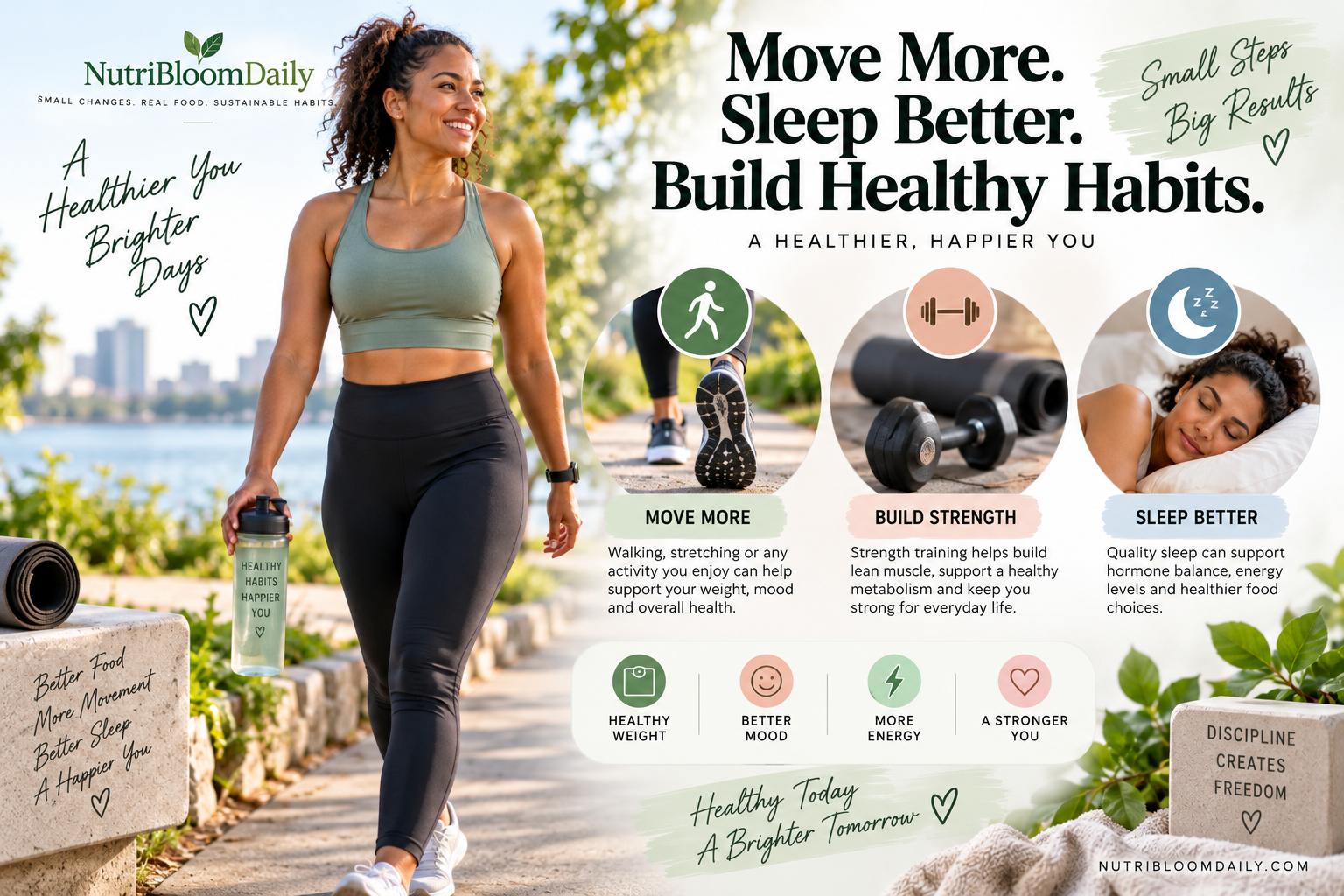
9. Walk More Throughout the Day
You don’t necessarily need an intense workout routine to start becoming more active.
Walking is accessible for many people and can be incorporated into everyday life.
Try:
Taking a short walk after lunch.
Walking while talking on the phone.
Parking farther from an entrance.
Taking the stairs when appropriate.
Going for an evening walk.
Taking short movement breaks during your workday.
U.S. physical activity guidelines recommend that adults work toward at least 150 minutes of moderate-intensity aerobic activity each week, along with muscle-strengthening activity on at least two days.
If you’re currently inactive, you don’t have to reach that amount immediately. Starting with shorter periods and gradually increasing activity can be more realistic.
Read Next: Walking for Weight Loss: A Beginner’s Guide
10. Include Strength Training
Cardio isn’t the only form of exercise that matters.
Muscle-strengthening activities are another important component of an active lifestyle.
Depending on your ability and experience, this might include:
Bodyweight exercises.
Resistance bands.
Free weights.
Weight machines.
The U.S. Physical Activity Guidelines recommend muscle-strengthening activities at least two days per week for adults.
If you’re new to exercise or have a medical condition, injury or mobility limitation, consider speaking with a qualified health professional before beginning a new exercise program.
11. Protect Your Sleep
Sleep is easy to overlook when thinking about weight management.
But it matters.
Research has linked insufficient sleep with changes in appetite, food intake and metabolic health.
Adults generally need at least seven hours of sleep per night, although individual needs vary.
Try creating a consistent bedtime routine, reducing late-night screen exposure when possible and keeping your sleeping environment comfortable.
Sleep isn’t a magic weight-loss tool.
But healthy sleep is an important part of overall health — and may make other healthy habits easier to maintain.
12. Practice Mindful Eating
How you eat can matter alongside what you eat.
Many of us eat while watching television, scrolling through our phones or working.
That can make it harder to notice hunger and fullness.
Try eating at least one meal per day without screens.
Slow down.
Taste your food.
Put your fork down occasionally.
Notice when you’re beginning to feel comfortably satisfied.
Mindful eating isn’t about creating more rules.
It’s about paying attention.
13. Don’t Label Foods as “Good” or “Bad”
A sustainable eating pattern has room for enjoyment.
Having pizza at a birthday party or dessert after dinner doesn’t mean you’ve “failed.”
What matters more is your overall eating pattern over time.
Instead of thinking:
“I ruined my diet.”
Try:
“That was one meal. My next meal is another opportunity to make a choice that supports my goals.”
This mindset can make healthy eating feel much more sustainable.
14. Don’t Chase Quick Fixes
Detox teas, extreme diets and “miracle” weight-loss products can be tempting, particularly when they promise dramatic results.
But sustainable weight management usually doesn’t come from a single food, supplement or trick.
Be cautious with products or programs promising extremely rapid weight loss or guaranteed results.
If a claim sounds too good to be true, look for credible evidence before spending your money or changing your diet.
15. Focus on Consistency, Not Perfection
This may be the most important strategy on this list.
You don’t need a perfect diet.
You don’t need a perfect exercise routine.
And you certainly don’t need a perfect week.
Instead, ask yourself:
“What healthy habit could I realistically continue six months from now?”
A 20-minute walk you actually take is more useful than an ambitious exercise plan you abandon after three days.
A simple breakfast you enjoy is better than an elaborate meal plan you can’t maintain.
Small choices repeated consistently can become powerful habits.
A Simple Day of Balanced Eating
Not sure what this might look like in real life?
Here’s one example.
Breakfast
Greek yogurt with berries, oats and chia seeds.
Lunch
Grilled chicken salad with colorful vegetables and whole-grain toast.
Snack
Apple with peanut butter.
Dinner
Baked salmon with roasted vegetables and brown rice.
Drink
Water or an unsweetened beverage.
This is simply an example, not a personalized meal plan. Your nutritional needs depend on factors such as age, body size, activity level, health conditions, medications and personal goals.
Common Weight-Loss Mistakes to Avoid
Trying to change everything overnight
Changing ten habits simultaneously can be overwhelming. Start small.
Following extremely restrictive diets
A plan you can’t maintain isn’t likely to become a sustainable lifestyle.
Drinking calories without noticing
Sweetened beverages can contribute significant calories.
Ignoring sleep
Nutrition and exercise matter, but sleep deserves attention too.
Giving up after one indulgent meal
One meal doesn’t determine your long-term progress.
Comparing your progress with someone else’s
Bodies, circumstances and health histories differ.
Focus on habits that work for you.
The NutriBloom 7-Day Healthy Habits Challenge
Want a simple place to start?
Try one small challenge each day.
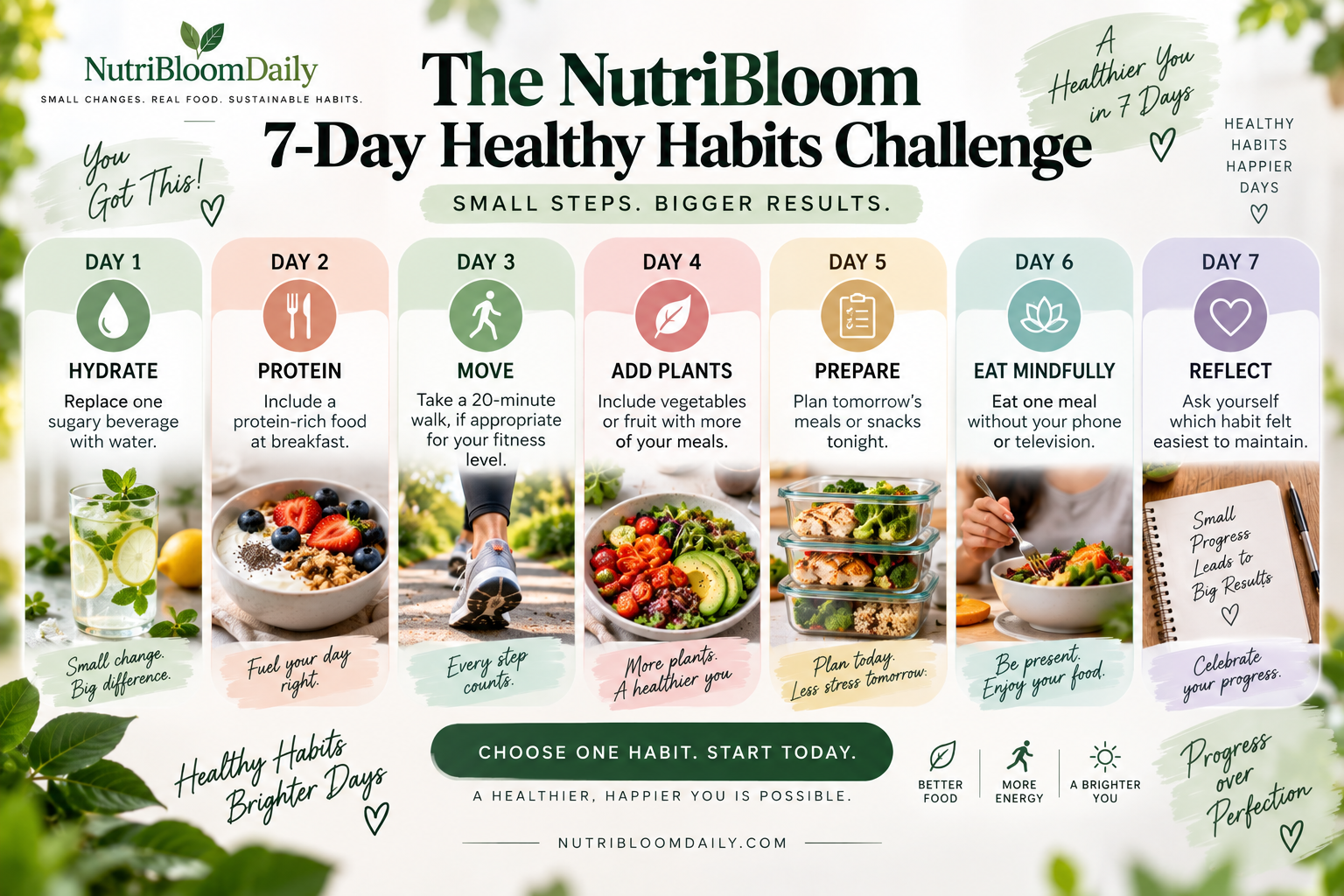
Day 1 — Hydrate: Replace one sugary beverage with water.
Day 2 — Protein: Include a protein-rich food at breakfast.
Day 3 — Move: Take a 20-minute walk, if appropriate for your fitness level.
Day 4 — Add Plants